Helping young audiences take the next step

Posted 19 August 2026

Media Trust’s Head of Communications and Impact, Jade Staiano, explores how arts charities can turn young people’s fleeting attention on social media into meaningful engagement.

Every day, young people use social media to discover places, experiences and communities, all while navigating an endless stream of content competing for their attention. They have become highly protective about what deserves their time, making quick decisions about what feels relevant, useful and worth exploring further.

When something feels authentic and is shared by people they trust, the good news is that young people do not just watch. They attend events, volunteer, share content and become advocates. The opportunity for arts charities is to help more young people make that journey. 

The way young people discover arts and culture has changed significantly in recent years. The pandemic accelerated a shift towards digital experiences, opening up new opportunities for connection and creativity while also exposing inequalities in digital access. Research suggests that arts and cultural organisations played an important role in supporting young people’s wellbeing by providing opportunities to connect, learn new skills and express themselves creatively. 

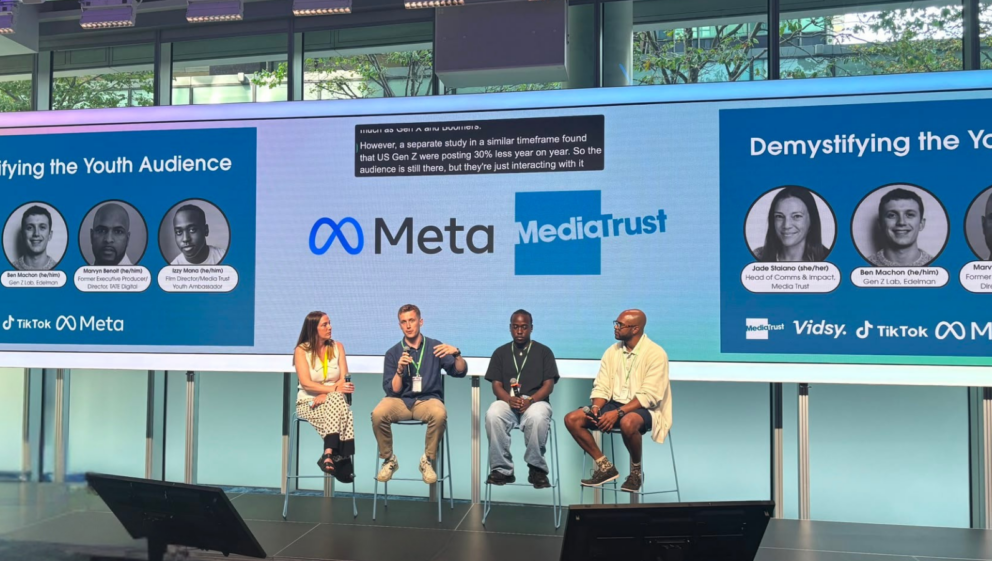
These shifts were at the heart of a recent Media Trust panel, Demystifying Youth Audiences, featuring Ben Machon from Edelman, Marvyn Benoit from Baker’s Dozen Studios, filmmaker Izzy Mana and myself. Together, we explored how young people’s relationship with arts organisations is evolving and what that means for small charities looking to build lasting connections. 

Three themes stood out.

Belonging is becoming the deciding factor 

Young people are looking for more than an interesting event or opportunity. They are looking for signals that tell them they will feel welcome.

That matters because many of the barriers to participation have little to do with interest. A British Council literature review found that young people continue to face unequal access to arts and cultural opportunities, with challenges including socio-economic circumstances, access to physical spaces, affordable transport, awareness of learning needs and other intersecting inequalities.  

Research commissioned by the Roundhouse reinforces this, finding that 87% of 18 to 30-year-olds believe they have fewer opportunities to be creative and build confidence than previous generations. 

For many organisations, the first opportunity to break down those barriers now happens online. Before someone buys a ticket or signs up to volunteer, they are deciding whether your organisation feels like somewhere they belong. 

As filmmaker Izzy Mana explained, “One thing I’d say to arts charities is… don’t overthink it. As a filmmaker but also just as someone who’s online every day, I’m much more likely to connect with content that feels real. I love seeing the people behind the scenes, hearing genuine stories and getting a sense of what the experience is actually like.” 

“Representation is really important too. When I see opportunities where I can see people who look like me or have a similar background it gives me the confidence to apply because I can actually picture myself there. I think that’s how a lot of young people feel. Just focus on telling real stories, celebrating different voices and creating content that makes people feel like they belong rather than following every trend. That’s what inspires people to get involved.” 

Belonging starts long before someone walks through the door. Increasingly, it begins with the stories organisations choose to tell. 

People matter more than polished content 

Our discussion also explored how trust is changing. Young people still value expertise, but they increasingly discover organisations through people rather than institutions.

Edelman’s 2026 Trust Barometer highlights the growing influence of trusted voices on social media, with recommendations from friends, creators and communities shaping whether people choose to engage with an organisation. For arts charities, that means the people who already make your organisation special, whether that’s participants, volunteers, artists or staff, are often your strongest ambassadors.

It also explains why behind-the-scenes moments resonate so strongly. They offer a genuine glimpse into what an organisation feels like and help people imagine themselves becoming part of it. 

As Marvyn Benoit shared during the panel discussion, “Capture everything. Record rehearsals, workshops, exhibitions, performances, and behind-the-scenes moments. Even short clips captured on a phone can become valuable content later, helping you build an archive for future posts and campaigns.” 

He added, “Tell stories, not just announcements. Don’t just promote events, share the people and the process behind them. Introduce artists, document the creative journey, and celebrate your community. Audiences connect with authentic stories far more than an influencer, commercial or press release alone.” 

Private sharing is overtaking public engagement 

One of the most interesting shifts we discussed was that some of the most meaningful engagement now happens away from public feeds.

Young people increasingly share recommendations in group chats, direct messages and conversations with friends. The content that travels furthest is often not the content with the most likes, but the content that feels useful enough, funny enough or reassuring enough for someone to send to somebody they know. 

This is encouraging for small charities, where building relationships does not always depend on reaching thousands of people. Sometimes it starts with one trusted recommendation.

It is also a reminder that trust grows over time. Someone may come across your organisation several times before deciding to visit or get involved, and every interaction helps build familiarity and confidence. There is real value in revisiting stories, celebrating past successes and resharing content that continues to reflect who you are.

Young people have not stopped looking for creative opportunities or communities where they feel they belong. If anything, they are looking more carefully than ever. 

Make the next step feel possible 

Organisations that thrive will not necessarily be those creating the most content, but those creating the strongest sense of welcome. When people can see themselves in your stories, hear about you from someone they trust and feel part of your community before they arrive, taking the next step becomes much easier. 

Read more blogs ...

WCAG 3.0: What your organisation needs to know

Blogs

Explore Passion4Social’s recent staff presentation on WCAG 3.0 and learn what the next generation of accessibility guidance means for your work, your services, and the people who rely on them. This article was written by...

Posted 21 May 2026

An open laptop computer screen displays the words: ‘WCAG 3.0, What you need to know.’ Passion4Social (logo).